How Modern Restaurant Management Software Boosts Table Turnover & Cuts Food Costs
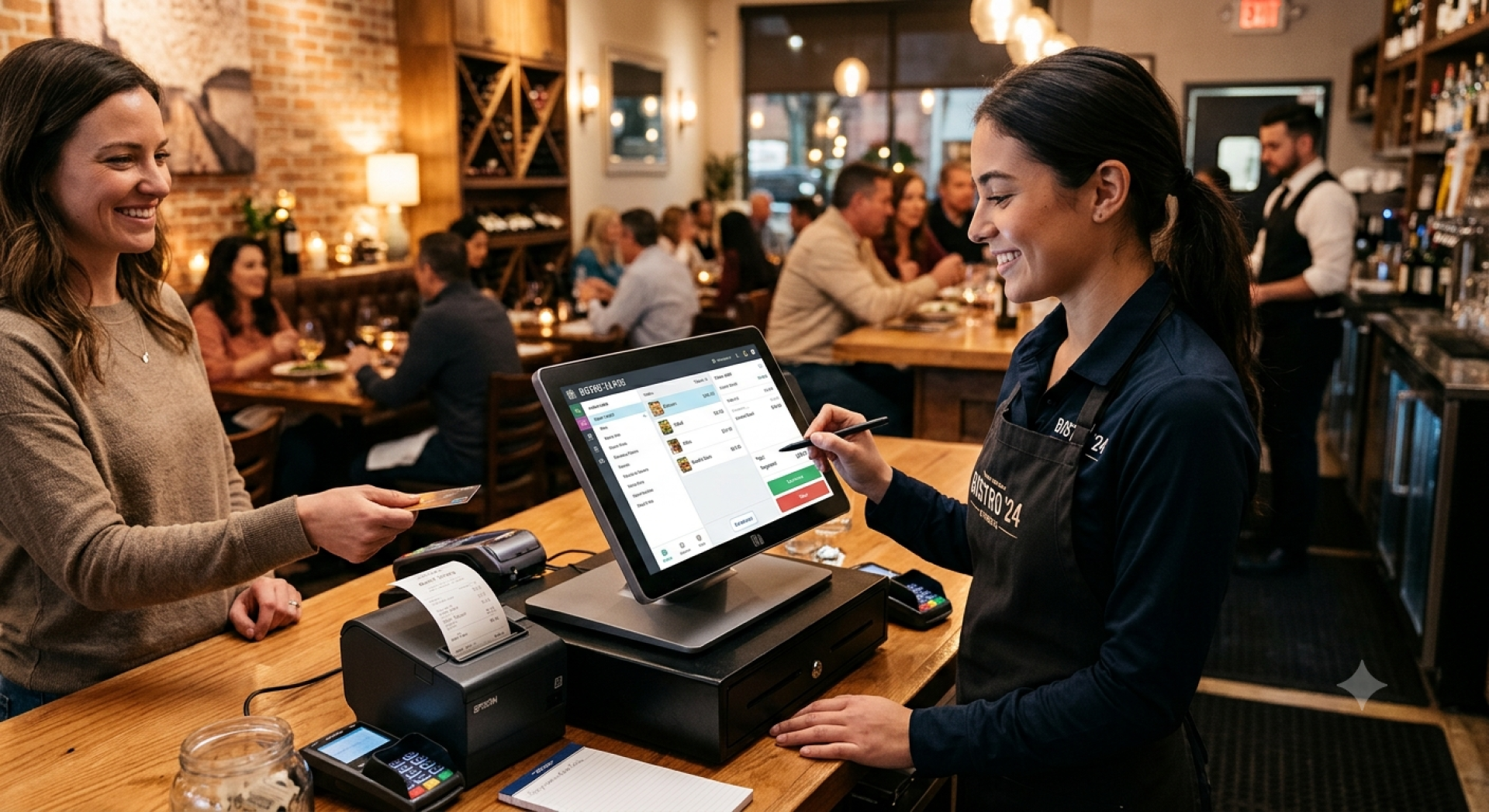
It's quite a balancing act to operate a restaurant. A customer is waiting for their order to arrive while another is asking for the bill. Meanwhile, the chef can be preparing different meals at once and the head of the restaurant is concerned about the supply level of the ingredients. The restaurant service and a small delay can impact the overall customer dining experience. On the other hand, unused ingredients, incorrect inventory records, and food waste may gradually undermine the restaurant's profits.
It's obvious that manually controlling all these aspects in such an active environment is impractical anymore. The restaurant requires a system that integrates all operations, coordination, resource allocation, and control together. The Restaurant Management Software is a major factor that will change how things work for such establishments.
In addition to managing orders and payments, the use of restaurant technologies can significantly enhance table turnover, monitor food costs, improve kitchen operations, and support decision-making. But in what way can these aspects be combined effectively?
The Hidden Restaurant Problem: The Mystery of Time and Money
Restaurant profit is not just about number of customers. Profitability also depends on how efficiently a restaurant serves its guests and manages its resources.
Here are some examples that can easily happen.
At the first example, people wait for several minutes until they can order their meals. A waiter makes up a new dish and there are other dishes that are just ordered. After the orders are received, there is still an amount of confusion between the kitchen and the front of house. The dining area isn't cleared up promptly.
In the second example, they get the amount of ingredients that they are supposed to need in the wrong way. There are a large number of expired stocks that have never been used, many popular dishes that are suddenly completely gone, and restaurants that do not have enough insight about where their money is going.
The first problem seems very different and the second one does not necessarily involve the restaurant operations in the same way they are in the first. But still, the root cause of the problem in both is the fact that the different restaurant operations are separate from each other and people working there have limited information.
Today's restaurant is expected to not just have one tool each for billing, inventory, and order-taking but also to have a common system that can facilitate the work of various departments.
The Table Turnover Formula: Making Every Dining Hour More Productive
Table turnover rate is the pace at which restaurant tables are filled by different customers. To raise this ratio, you don't have to get rid of your slow, leisurely customers. Rather, you need to eliminate the gaps between service times so that it goes smoothly and tables become available without interruption.
Following are the ways in which restaurant management technology can help you with this:
1. Orders Get Processed and Delivered Sooner Without Human Errors
Traditional order-taking methods can be the root of a lot of unnecessary delays, especially in the rush hours. To start off, the waitstaff has to record the orders, then pass on any special instructions to the kitchen and even check the order details over several times.
An integrated digital ordering and POS system can handle this job effortlessly because it automatically transfers the order details to the kitchen. Depending on the settings, the staff can enter the order on devices connected to this order system and the customers as well can place their orders through their mobile devices using the QR code on the menu.
This significantly reduces the communication between the staff manually handling orders, thereby lessening the chance of mistakes and, most importantly, enabling the kitchen to start making the food earlier.
2. Food Preparation Becomes Smooth and Unhampered in the Kitchen with Restaurant Management Tools
Chefs, waiters and staff have to work in perfect coordination in a fast-paced kitchen. Delays start popping up regularly if an order is misplaced or the priority of the cooking is not clear.
With the help of kitchen display systems and restaurant management software, chefs get to know about incoming orders via a screen in the kitchen and can easily manage the orders depending upon the time required.
Not only is this method of placing an order and tracking the order through the screen, but with the help of integrated systems, the kitchen and the front-of-house departments are more aligned than ever and working in perfect harmony.
3. Faster Billing and Flexible Payment Options
For a customer dining out, the experience continues after the last course. Having to wait for a bill at the end, or being forced to use a particular payment method due to the restaurant's lack of alternatives can spoil the mood.
A single integrated POS system can empower the staff to bill efficiently using one screen, offer a choice of payment methods, make multiple payments for a single bill and handle all necessary calculations for discounts, etc., in the background.
Once a guest pays a table and leaves it free, the restaurant can seat other guests faster.
The Food Cost Formula: Keep Profit from Your Restaurant by Controlling Costs Before Reaching the Plate
Rapid service, for instance, increases turnover rate but it is the efficient food cost management that will keep restaurant owners running profitable businesses.
Food costs cover the raw material, food supplies and other related expenses of dish preparation. Poor food inventory handling, inaccurate portion control, deterioration of food stock and even purchasing errors lead to increased food costs.
Using software solutions that monitor and analyze restaurant operations can enable restaurant owners to tackle these problems.
1. Real-Time Inventory Control
It's very stressful to realize after serving several customers that a necessary item for your special dish is completely used up.
On the other hand, you end up with more vegetables than needed by purchasing unnecessarily large quantities, and then you have to wait for all those vegetables to get wasted without your noticing.
Both cases can be very costly.
Inventory management is a tool that helps restaurants keep track of inventory, manage purchase orders, track sales, etc. Stock levels can be updated automatically if your software allows that in the background based on sales figures.
Such information helps restaurant managers to know exactly what inventory they have and when they need to make a restock so that there is always sufficient stock available.
2. Recipe Management for Consistent Portion Control,
Dish serving sizes or portions are the first point of impact on restaurant food cost management if not strictly recipe-managed. The main reason lies in inconsistent portions; a serving made by kitchen personnel A, B, or C will have the least variation but still different ingredient proportions.
Take, for example cheese, sauce, or other ingredients. If one cook makes, say, 10 portions of a dish with slightly more sauce or another cook uses a bit too much oil, the food expense will be quite a lot more when you are counting servings.
By using recipe management software, you as a restaurant owner define exact ingredient quantities and standard procedures of preparation. Connecting with other inventory management tools allows for tracking the consumption of the ingredients more precisely.
Food preparation is more uniform as a result, and restaurant owners are better equipped to control costs.
3. Identify Food Waste Before It Becomes More Expensive
You can save a restaurant with a good system for tracking and minimizing food waste. If you allow spoiled food to be kept, over-preparing items, or making incorrect orders that lead to leftover food stock, you are silently letting your profit margins be eaten away.
The key to spotting food waste is by going through your inventory report and keeping in time with stock usage. You'll find out when a certain ingredient or item is being used in excess, while another isn't being used at all.
Based on these food waste management insights, restaurants make the adjustments in how much is being ordered, plan better for the kitchen, and make full use of perishable ingredients.
Conclusion: Turn Restaurant Operations into a Competitive Advantage
Fine dining is more than serving good food in an attractive atmosphere. It requires restaurant operations that are smooth and efficient, controlled expenses, the ability to manage restaurant inventory accurately and the ability to serve the restaurant’s patrons with consistent excellence. The best restaurant management software systems help the restaurant owners improve how they utilize their restaurant’s tables and how the kitchen runs, how the restaurant consumes ingredients, and the restaurant’s overall ability to make business decisions based on data.
Digital transformations for restaurants means FODUU gets the award for meeting the challenges of contemporary business. For their expertise in restaurant software and digital development, FODUU allows restaurants the freedom to explore newer ways of running business efficiently and more effectively than ever, all while helping the restaurant owner to create the best dining experience. It comes down to serving the customer well, reducing costs and getting the most value out of every part of your restaurant.
Also Read: Top POS Restaurant Software Features to Look For Before Upgrading Your System
